
Strategies that Help Students to Organize Ideas, Build Paragraphs, and Implement Transitions in Their Writing

For example, if a student is still struggling with letter formation, the moment they attempt to write down their wonderful ideas, their attention is often hijacked by the demanding fine motor task. Likewise, students who wrestle with spelling may lose their train of thought as they become sidetracked by sounds, symbols, and spelling rules. Others have rich ideas and strong language, yet find it exhausting and frustrating to organize and sequence the surge of thoughts racing through their minds.
For many learners, a certain level of automaticity must develop before these tasks can be woven together smoothly. Until then, writing can feel more like a mental obstacle course than a creative or expressive experience.
So, what strategies can help students master the foundational elements of writing while preserving their ideas and confidence?
Supportive Strategies for Struggling Writers
-
Reduce the spelling load.
If spelling is a significant challenge, allow the student to dictate their ideas while you write them down, or use voice-to-text software such as Dragon Dictate. This frees cognitive energy for idea generation and organization. -
Make organization explicit.
When organizing ideas is difficult, help students identify main ideas and supporting details. Use outlines, graphic organizers, or webs to visually map and sequence their thoughts. -
Offer alternatives to handwriting.
If handwriting is labored but typing is efficient, allow the student to use a computer for written assignments and classroom work. -
Use dictation when motor output is a barrier.
If both handwriting and typing are challenging, return to dictation—either to an adult or through voice-to-text technology. -
Support initiation.
If getting started is the biggest hurdle, talk through the topic together. Ask guiding questions and record the student’s responses in writing or with a voice-recording device to capture ideas before they fade. -
Build skills through practice—without burnout.
When students struggle with any component of writing, they need ample practice to build mastery. Whenever possible, make practice engaging by using game-like activities or supportive software programs, especially for skills like typing. -

Seek a comprehensive evaluation when needed. If writing difficulties persist across multiple areas, consider requesting a full psychoeducational evaluation through your school district or a qualified professional in your community to rule out a learning disability.
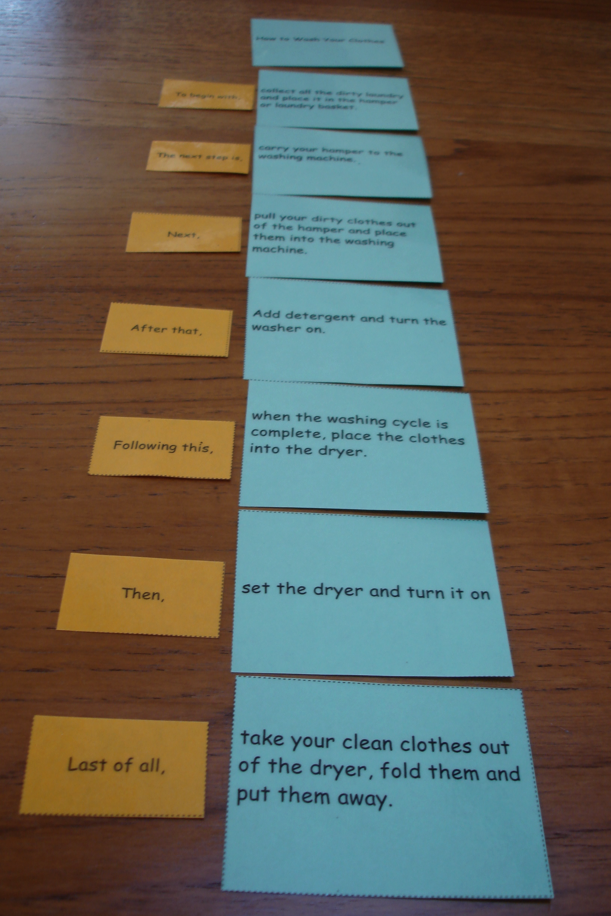
If you’d like additional support for teaching students how to organize ideas andstructure writing, I invite you to explore my publication, Categorizing, Paragraph Building, and Transitional Word Activities. This 30-page downloadable resource features printable, game-like activities that help students practice organizing main ideas and details, sequencing sentences, and using transitional words effectively. The activities are well-suited for elementary students, with additional materials designed for older learners as well.
Cheers, Erica
Dr. Erica Warren is the author, illustrator, and publisher of multisensory educational materials at Good Sensory Learning. She is also the director of Learning to Learn and Learning Specialist Courses.
- Blog: https://goodsensorylearning.com/blogs/news
- YouTube Channel: https://www.youtube.com/user/warrenerica1
- Executive Function Podcast: https://goodsensorylearning.com/pages/the-personal-brain-trainer-podcast-with-dr-erica-warren
- Store: http://www.Goodsensorylearning.com/
- Courses: http://www.learningspecialistcourses.com/
- Newsletter Sign-up: https://good-sensory-learning.kit.com/drericawarren


Leave a comment
This site is protected by hCaptcha and the hCaptcha Privacy Policy and Terms of Service apply.